
White-spotted Slimy Salamander
Plethodon cylindraceus
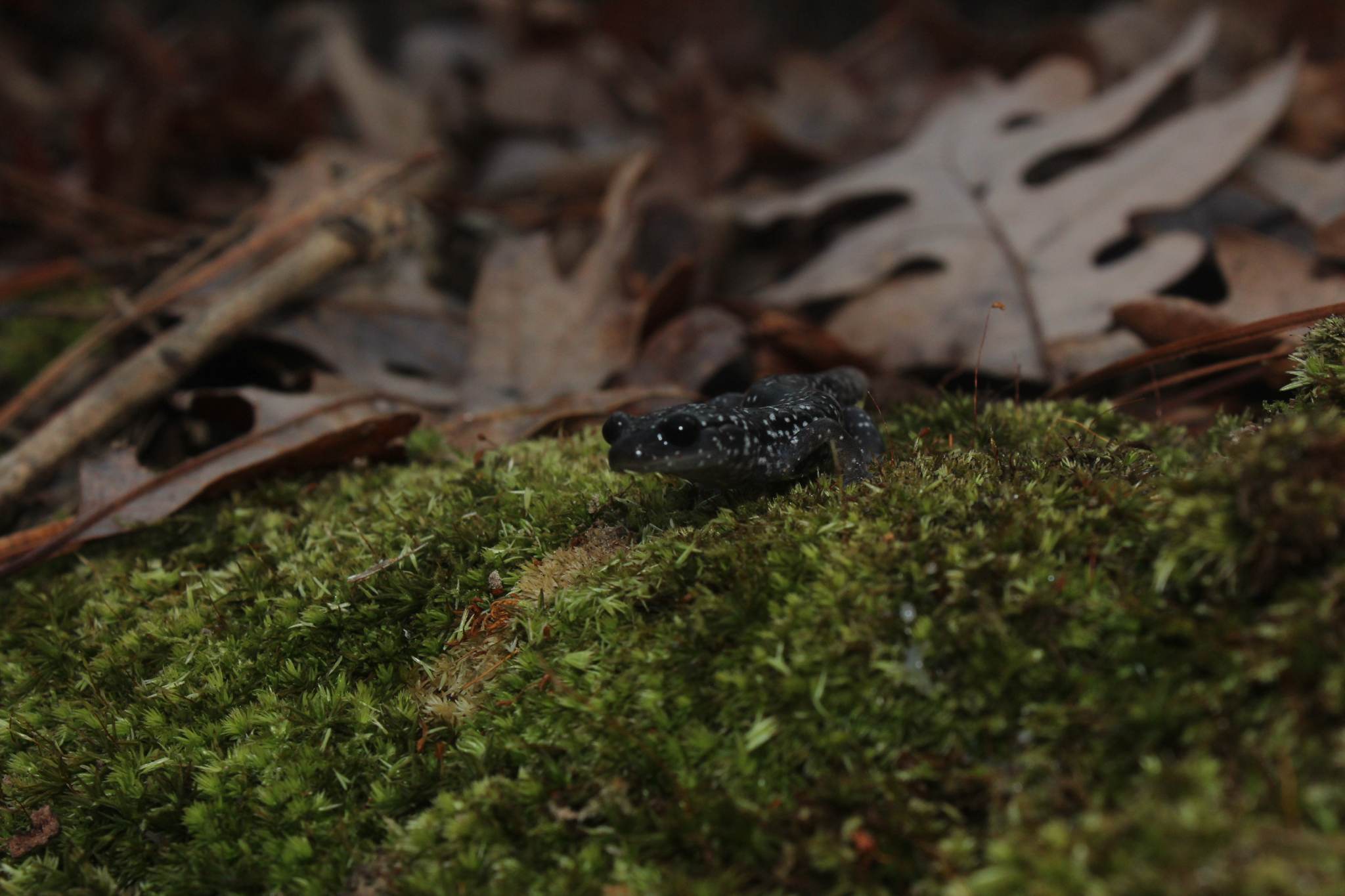
The white-spotted slimy salamander (Plethodon cylindraceus) is a species of salamander in the family Plethodontidae endemic to the Eastern United States.
- Kingdom
- Animalia
- Phylum
- Chordata
- Class
- Amphibia
- Order
- Caudata
- Family
- Plethodontidae
- Genus
- Plethodon
- Species
- Plethodon cylindraceus
Description
The white-spotted slimy salamander (Plethodon cylindraceus) is a species of salamander in the family Plethodontidae endemic to the Eastern United States. It is one of 55 species in the genus Plethodon, and was one of the first to be described of its cogeners. The preferred habitat of this species is under logs and leaf litter in shaded hardwood forests and wooded floodplains, and often forages on the forest floor on wet nights. It was found that with increasing temperatures, the aggression in this species also increases. In the plethodon genus, species have a lungless morphology, restricting nearly all gas and water exchange transport to the body surface. This species mainly consumes insects, including ants, centipedes, springtails, crickets, millipedes, slugs, snout-beetles, and earthworms. Common predators of this species are gartersnakes, copperheads, and birds. One of their predator defense mechanisms is the release of noxious/sticky substances through the skin by the dorsal granular glands. Another predator deterrent is when touched, this species will freeze in place and become immobile. This species of Plethodon are mostly terrestrial and deposit their direct-developing eggs on land that omits the aquatic larval stage characteristic of most amphibians, therefore this species is not restricted to aquatic habitats for reproduction and dispersal. This species, along with other Plethodontid salamanders, are frequently parasitized by Trombicula mites.
Gallery
Ajouter des photos
Partagez vos photos de cette espèce (jusqu'à 20 à la fois) : elles sont vérifiées automatiquement, puis publiées.
Répartition
Occurrences observées (données GBIF). Les zones hors aire d'origine peuvent indiquer une présence introduite ou invasive.
Sources et crédits
Informations provenant de plusieurs sources vérifiées. Dernière mise à jour : .
Crédits photos (6)
- Photo : Parker Saunders · CC BY-NC 4.0 · via GBIF
- Photo : @lissasee · CC BY-NC 4.0 · via iNaturalist
- Photo : Gracie Catanzaro (@graytreefrog) · CC BY-NC 4.0 · via iNaturalist
- Photo : @kclinevell · CC BY-NC 4.0 · via iNaturalist
- Photo : @naturepunk · CC BY-NC 4.0 · via iNaturalist
- Photo : Cathy Fergen (@partridgeberry22) · CC BY-NC 4.0 · via iNaturalist
Mentions de licence
Texte disponible sous licence CC BY-SA 4.0. Il adapte notamment Wikipedia (CC BY-SA) : White-spotted slimy salamander (Wikipédia, auteurs dans l’historique de l’article).
- Taxonomie : GBIF Backbone Taxonomy (CC BY 4.0)
- Carte : occurrences GBIF, fond © contributeurs OpenStreetMap (ODbL)
- Statut de conservation : Liste rouge de l'UICN, via Wikidata (CC0)
Détail : Sources et licences.
Discussion (0)
Aucun message pour l’instant. Lancez la discussion sur cette fiche (sources, précisions, débats éditoriaux).
Connectez-vous pour participer à la discussion.