
Sphagnum frog
Philoria sphagnicolus
The sphagnum frog (Philoria sphagnicola) is a frog in the family Limnodynastidae.
- Kingdom
- Animalia
- Phylum
- Chordata
- Class
- Amphibia
- Order
- Anura
- Family
- Limnodynastidae
- Genus
- Philoria
- Species
- Philoria sphagnicolus
Description
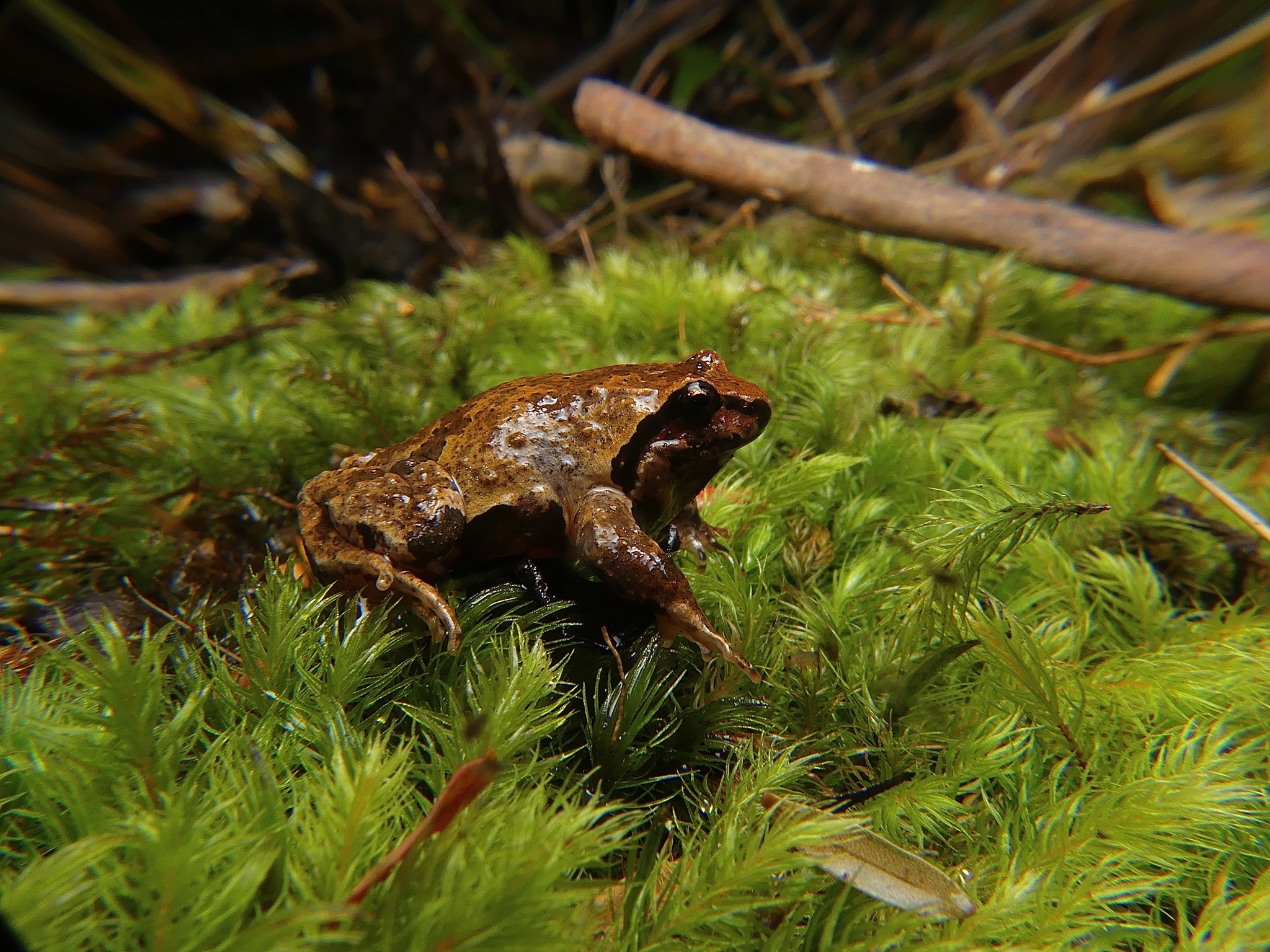
The sphagnum frog (Philoria sphagnicola) is a frog in the family Limnodynastidae. The species was first described by John Alexander Moore in 1958. Its natural habitats are subtropical moist upland forests, subtropical moist montane forests, and streams. They vary in colour from shades of yellow and orange. They usually have irregular black spots that range all over their body. Their main source of diet comes from small insects, usually ants. This species was classified as endangered in 2004, and was subsequently downlisted to vulnerable in 2023. It is threatened by climate change pathogens and habitat loss. It is endemic to Australia. There have been other recommendations by scientist and other groups made to protect this species. Some of these recommendations are exclude logging around breeding areas, prevent pollution of streams and wetlands, and maintain vegetation and deep-leaf litter around streams.
Ajouter des photos
Partagez vos photos de cette espèce (jusqu'à 20 à la fois) : elles sont vérifiées automatiquement, puis publiées.
Répartition
Occurrences observées (données GBIF). Les zones hors aire d'origine peuvent indiquer une présence introduite ou invasive.
Sources et crédits
Informations provenant de plusieurs sources vérifiées. Dernière mise à jour : .
Crédits photos (1)
- Photo : Ollie Scully · CC BY-NC 4.0 · via GBIF
Mentions de licence
Texte disponible sous licence CC BY-SA 4.0. Il adapte notamment Wikipedia (CC BY-SA) : Sphagnum frog (Wikipédia, auteurs dans l’historique de l’article).
- Taxonomie : GBIF Backbone Taxonomy (CC BY 4.0)
- Carte : occurrences GBIF, fond © contributeurs OpenStreetMap (ODbL)
- Statut de conservation : Liste rouge de l'UICN, via Wikidata (CC0)
Détail : Sources et licences.
Discussion (0)
Aucun message pour l’instant. Lancez la discussion sur cette fiche (sources, précisions, débats éditoriaux).
Connectez-vous pour participer à la discussion.