
Caucasian smooth newt
Lissotriton lantzi
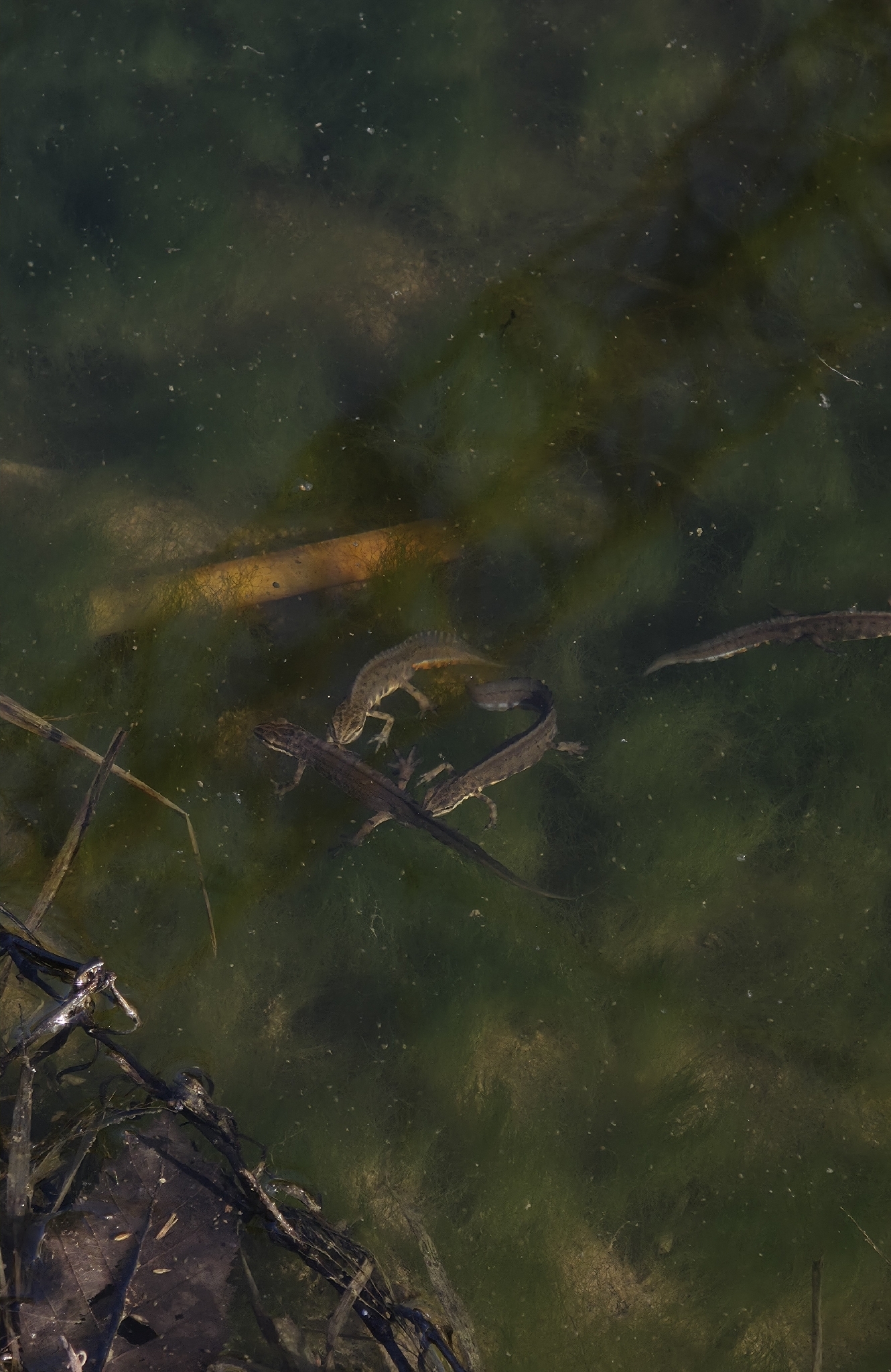
The Caucasian smooth newt or Caucasian newt (Lissotriton lantzi) is a newt species found in the Caucasus region, from the Don river mouth in Russia to Georgia, and potentially Armenia, Azerbaijan, extreme northeastern Turkey and Iran.
- Kingdom
- Animalia
- Phylum
- Chordata
- Class
- Amphibia
- Order
- Caudata
- Family
- Salamandridae
- Genus
- Lissotriton
- Species
- Lissotriton lantzi
Description
The Caucasian smooth newt or Caucasian newt (Lissotriton lantzi) is a newt species found in the Caucasus region, from the Don river mouth in Russia to Georgia, and potentially Armenia, Azerbaijan, extreme northeastern Turkey and Iran. It occurs from sea level to 2,500 m (8,200 ft) elevation. Willy Wolterstorff described the species in 1914 as Triton vulgaris subsp. typica forma lantzi, a form of the smooth newt (now Lissotriton vulgaris), and it was later raised to subspecies rank. After genetic data had suggested the smooth newt was a complex of distinct lineages, Dubois and Raffaëlli, in 2009, recognised several subspecies, including the Caucasian smooth newt, as distinct species. This was followed by subsequent authors. The species differs from other species in the smooth newt species complex mainly in the male secondary characters during breeding season. The dorsal crest in males reaches 1 mm or more in height and has an almost spine-shaped denticulation. The tail gradually elongates into a fine thread but has no distinct filament. The body is slightly square-shaped but has no dorso-lateral folds. Toe flaps are moderately developed. Paedomorphic adults have been recorded for the Caucasian smooth newt. The species's conservation status has not yet been evaluated separately from the smooth newt by the IUCN. Since its range is much smaller than that of the smooth newt species complex as a whole, it is likely to be more vulnerable than previously estimated. In Armenia, Azerbaijan and northeastern Turkey, it is potentially extinct. It is listed in the Red Data Books of Russia and the majority of its North Caucasus provinces and autonomous republics. Destruction of aquatic habitats, deforestation, collection for the pet trade and the introduction of fish were cited as threats.
Gallery
Ajouter des photos
Partagez vos photos de cette espèce (jusqu'à 20 à la fois) : elles sont vérifiées automatiquement, puis publiées.
Répartition
Occurrences observées (données GBIF). Les zones hors aire d'origine peuvent indiquer une présence introduite ou invasive.
Sources et crédits
Informations provenant de plusieurs sources vérifiées. Dernière mise à jour : .
Crédits photos (6)
- Photo : Алена Ручка · CC BY 4.0 · via GBIF
- Photo : @timofey_bar · CC BY-NC 4.0 · via iNaturalist
- Photo : @ilya_zlobin · CC BY-NC 4.0 · via iNaturalist
- Photo : Александр Гончаров (@gonkem1986) · CC BY-NC 4.0 · via iNaturalist
- Photo : Sebastian Voitel (@sebastian-voitel) · CC BY-NC 4.0 · via iNaturalist
- Photo : @w_shakhparonov · CC BY-NC 4.0 · via iNaturalist
Mentions de licence
Texte disponible sous licence CC BY-SA 4.0. Il adapte notamment Wikipedia (CC BY-SA) : Caucasian smooth newt (Wikipédia, auteurs dans l’historique de l’article).
- Taxonomie : GBIF Backbone Taxonomy (CC BY 4.0)
- Carte : occurrences GBIF, fond © contributeurs OpenStreetMap (ODbL)
Détail : Sources et licences.
Discussion (0)
Aucun message pour l’instant. Lancez la discussion sur cette fiche (sources, précisions, débats éditoriaux).
Connectez-vous pour participer à la discussion.