
Alpine Newt
Ichthyosaura alpestris
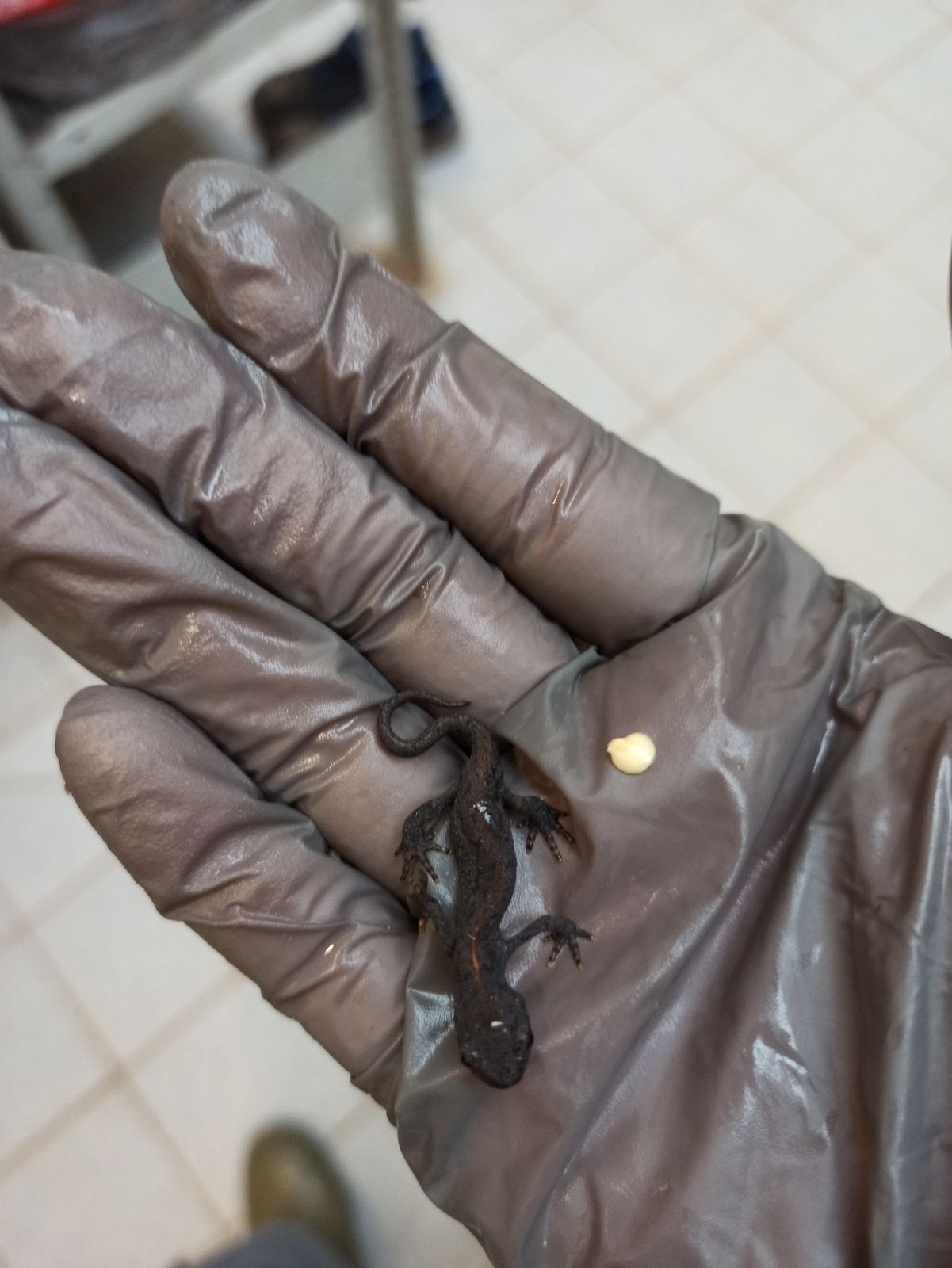
The alpine newt (Mesotriton alpestris) is a species of newt native to continental Europe and introduced to Great Britain and New Zealand.
- Kingdom
- Animalia
- Phylum
- Chordata
- Class
- Amphibia
- Order
- Caudata
- Family
- Salamandridae
- Genus
- Ichthyosaura
- Species
- Ichthyosaura alpestris
Description
The alpine newt (Mesotriton alpestris) is a species of newt native to continental Europe and introduced to Great Britain and New Zealand. Adults measure 7–12 cm (2.8–4.7 in) and are usually dark grey to blue on the back and sides, with an orange belly and throat. Males are more conspicuously coloured than the drab females, especially during breeding season. The alpine newt occurs at high altitude as well as in the lowlands. Living mainly in forested land habitats for most of the year, the adults migrate to puddles, ponds, lakes or similar water bodies for breeding. Males court females with a ritualised display and deposit a spermatophore. After fertilisation, females usually fold their eggs into leaves of water plants. The aquatic larvae grow up to 5 cm (2.0 in) in around three months before metamorphosing into terrestrial juvenile efts, which mature into adults at around three years. In the southern range, the newts sometimes do not metamorphose but keep their gills and stay aquatic as paedomorphic adults. Larvae and adults feed mainly on diverse invertebrates and themselves fall prey to dragonfly larvae, large beetles, fish, snakes, birds or mammals. Populations of the alpine newt started to diverge around 20 million years ago. At least four subspecies are distinguished, and some argue there are several distinct, cryptic species. Although still relatively common and classified as Least Concern on the IUCN Red List, alpine newt populations are decreasing and have locally gone extinct. The main threats are habitat destruction, pollution and the introduction of fish such as trout into breeding sites. Where it has been introduced, the alpine newt can potentially transmit diseases to native amphibians, and it is being eradicated in New Zealand.
Gallery
Ajouter des photos
Partagez vos photos de cette espèce (jusqu'à 20 à la fois) : elles sont vérifiées automatiquement, puis publiées.
Répartition
Occurrences observées (données GBIF). Les zones hors aire d'origine peuvent indiquer une présence introduite ou invasive.
Sources et crédits
Informations provenant de plusieurs sources vérifiées. Dernière mise à jour : .
Crédits photos (10)
- Photo : Zookeeper_Veronix · CC BY-NC 4.0 · via GBIF
- Photo : Jonathan Neumann · CC BY-NC 4.0 · via GBIF
- Photo : Hugo Mesguen · CC BY-NC 4.0 · via GBIF
- Photo : Louis-salmon · CC BY-NC 4.0 · via GBIF
- Photo : Johan Devos · CC BY-NC 4.0 · via GBIF
- Photo : Pierre Legrée · CC BY-NC 4.0 · via GBIF
- Photo : Edy · CC BY-NC 4.0 · via GBIF
- Photo : Pierre Legrée · CC BY-NC 4.0 · via GBIF
- Photo : Pierre Legrée · CC BY-NC 4.0 · via GBIF
- Photo : Pierre Legrée · CC BY-NC 4.0 · via GBIF
Mentions de licence
Texte disponible sous licence CC BY-SA 4.0. Il adapte notamment Wikipedia (CC BY-SA) : Alpine newt (Wikipédia, auteurs dans l’historique de l’article).
- Taxonomie : GBIF Backbone Taxonomy (CC BY 4.0)
- Carte : occurrences GBIF, fond © contributeurs OpenStreetMap (ODbL)
- Statut de conservation : Liste rouge de l'UICN, via Wikidata (CC0)
Détail : Sources et licences.
Discussion (0)
Aucun message pour l’instant. Lancez la discussion sur cette fiche (sources, précisions, débats éditoriaux).
Connectez-vous pour participer à la discussion.