
Nanhu Salamander
Hynobius glacialis
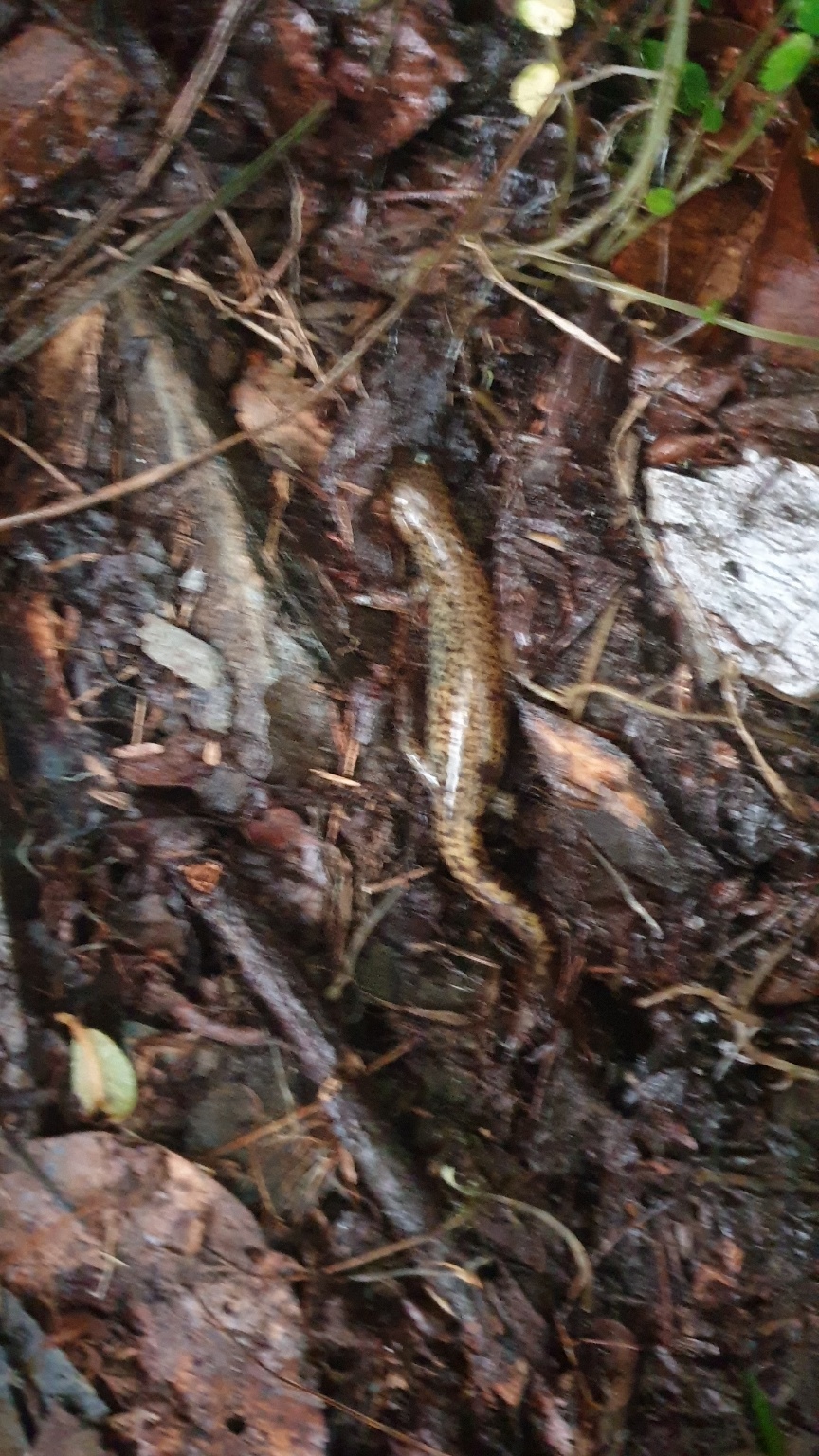
Hynobius glacialis, the Nanhu salamander, is a species of salamander in the family Hynobiidae, endemic to Taiwan.
- Kingdom
- Animalia
- Phylum
- Chordata
- Class
- Amphibia
- Order
- Caudata
- Family
- Hynobiidae
- Genus
- Hynobius
- Species
- Hynobius glacialis
Description
Hynobius glacialis, the Nanhu salamander, is a species of salamander in the family Hynobiidae, endemic to Taiwan. Its common name refers to the type locality, Nanhu Mountain. The mountain contains glacial relic formations, the reason for the species epithet glacialis. Nanhu salamanders are known from the northern Central Mountain Range and the Syueshan Mountain Range from above 3,000 m (9,800 ft). They are parapatric with H. formosanus that occurs at lower altitudes. They live near alpine tundra, usually beside creeks, cold springs, and seepages, usually hiding during the day. Their reproductive biology remains unknown. The Nanhu salamander is medium-sized; adults are about 4.8–6.7 cm (1.9–2.6 in) in snout–vent length; it is the largest Taiwanese hynobiid.
Gallery
Ajouter des photos
Partagez vos photos de cette espèce (jusqu'à 20 à la fois) : elles sont vérifiées automatiquement, puis publiées.
Répartition
Occurrences observées (données GBIF). Les zones hors aire d'origine peuvent indiquer une présence introduite ou invasive.
Sources et crédits
Informations provenant de plusieurs sources vérifiées. Dernière mise à jour : .
Crédits photos (2)
- Photo : taiwan_habu · CC BY-NC 4.0 · via GBIF
- Photo : 小翰 (@hans_wildlife) · CC BY-NC 4.0 · via iNaturalist
Mentions de licence
Texte disponible sous licence CC BY-SA 4.0. Il adapte notamment Wikipedia (CC BY-SA) : Hynobius glacialis (Wikipédia, auteurs dans l’historique de l’article).
- Taxonomie : GBIF Backbone Taxonomy (CC BY 4.0)
- Carte : occurrences GBIF, fond © contributeurs OpenStreetMap (ODbL)
- Statut de conservation : Liste rouge de l'UICN, via Wikidata (CC0)
Détail : Sources et licences.
Discussion (0)
Aucun message pour l’instant. Lancez la discussion sur cette fiche (sources, précisions, débats éditoriaux).
Connectez-vous pour participer à la discussion.