
Oita Salamander
Hynobius dunni
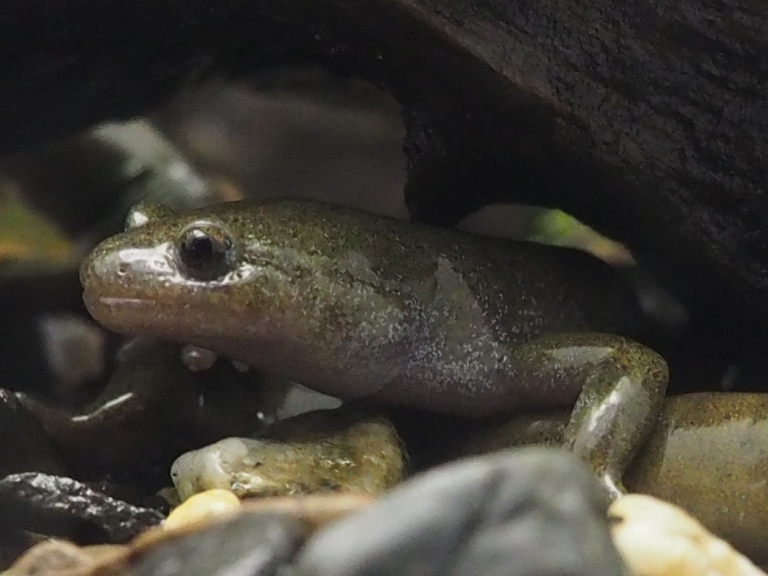
The Oita salamander (Hynobius dunni) is a species of salamander in the family Hynobiidae endemic to Japan.
- Kingdom
- Animalia
- Phylum
- Chordata
- Class
- Amphibia
- Order
- Caudata
- Family
- Hynobiidae
- Genus
- Hynobius
- Species
- Hynobius dunni
Description
The Oita salamander (Hynobius dunni) is a species of salamander in the family Hynobiidae endemic to Japan. Named after Ōita Prefecture, its natural habitats are temperate forests, rivers, intermittent rivers, freshwater marshes, intermittent freshwater marshes, and irrigated land in western Japan. It is threatened by habitat loss, due to the increasing construction of homes within its habitat. The Oita salamander is considered to be vulnerable by the (IUCN) Red List of Threatened Species with a declining population. Across Japan, the Oita salamander genetically differs based on their location. The DNA diversity was most apparent when comparing both the Northern and Southern species across Japan.
Gallery
Ajouter des photos
Partagez vos photos de cette espèce (jusqu'à 20 à la fois) : elles sont vérifiées automatiquement, puis publiées.
Répartition
Occurrences observées (données GBIF). Les zones hors aire d'origine peuvent indiquer une présence introduite ou invasive.
Sources et crédits
Informations provenant de plusieurs sources vérifiées. Dernière mise à jour : .
Crédits photos (4)
- Photo : 池上富士夫 · CC BY-SA 3.0
- Photo : Rei Akiyama (@eri3000) · CC BY-NC 4.0 · via iNaturalist
- Photo : Sebastian Voitel (@sebastian-voitel) · CC BY-NC 4.0 · via iNaturalist
- Photo : @westville808 · CC BY-NC 4.0 · via iNaturalist
Mentions de licence
Texte disponible sous licence CC BY-SA 4.0. Il adapte notamment Wikipedia (CC BY-SA) : Oita salamander (Wikipédia, auteurs dans l’historique de l’article).
- Taxonomie : GBIF Backbone Taxonomy (CC BY 4.0)
- Carte : occurrences GBIF, fond © contributeurs OpenStreetMap (ODbL)
- Statut de conservation : Liste rouge de l'UICN, via Wikidata (CC0)
Détail : Sources et licences.
Discussion (0)
Aucun message pour l’instant. Lancez la discussion sur cette fiche (sources, précisions, débats éditoriaux).
Connectez-vous pour participer à la discussion.