
Chamberlain's Dwarf Salamander
Eurycea chamberlaini
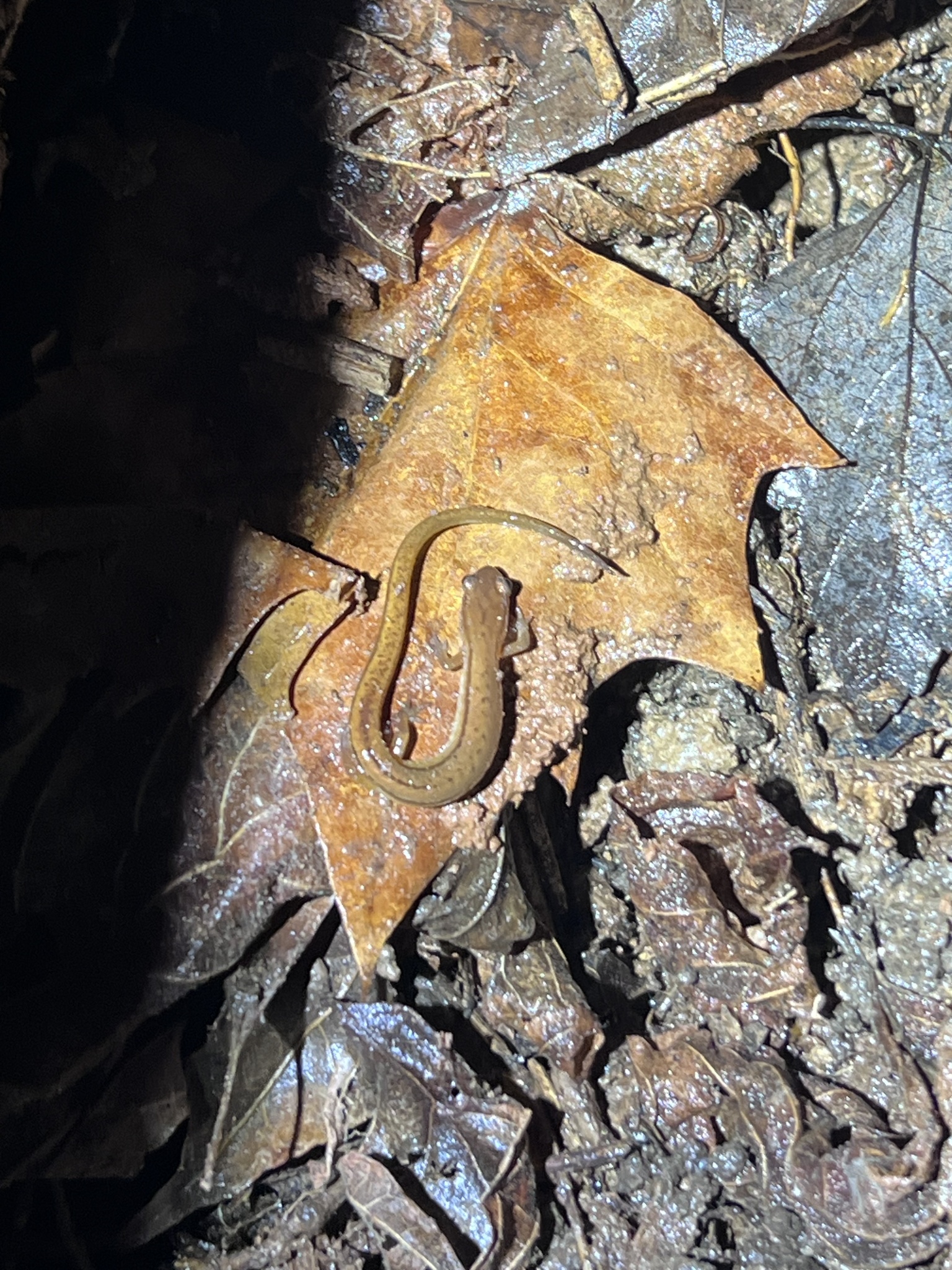
Chamberlain's dwarf salamander (Eurycea chamberlaini) is a species of salamander in the family Plethodontidae, endemic to the United States.
- Kingdom
- Animalia
- Phylum
- Chordata
- Class
- Amphibia
- Order
- Caudata
- Family
- Plethodontidae
- Genus
- Eurycea
- Species
- Eurycea chamberlaini
Description
Chamberlain's dwarf salamander (Eurycea chamberlaini) is a species of salamander in the family Plethodontidae, endemic to the United States. It is only found in the states of North Carolina and South Carolina. It was previously thought to be a color morph of the southeastern dwarf salamander (Eurycea quadridigitata), but was described in 2003 as a distinct species based on distinct morphology and behavior. A 2017 study reaffirmed it as being a distinct species. It is estimated that E. chamberlaini diverged from E. quadridigitata anywhere from 27 to 15 million years ago. The species is named for Edward Burnham Chamberlain, a former curator of the Vertebrate Zoology department at the Charleston Museum. Eurycea chamberlaini currently is listed as a "State Species of Special Concern" in North Carolina. A 2021 IUCN study classified E. chamberlaini as a species of "least concern". Its small size and small habitat range have proved to make research on the species challenging. There is scant research available on the E. chamberlaini and other dwarf salamander species population but in recent years several studies have been conducted to further understanding of reproductive cycles and the species population.
Gallery
Ajouter des photos
Partagez vos photos de cette espèce (jusqu'à 20 à la fois) : elles sont vérifiées automatiquement, puis publiées.
Répartition
Occurrences observées (données GBIF). Les zones hors aire d'origine peuvent indiquer une présence introduite ou invasive.
Sources et crédits
Informations provenant de plusieurs sources vérifiées. Dernière mise à jour : .
Crédits photos (6)
- Photo : applesauceee · CC BY-NC 4.0 · via GBIF
- Photo : Joshua Rains (@joshua_rains) · CC BY-NC 4.0 · via iNaturalist
- Photo : Robby Deans (@hydaticus) · CC BY-NC 4.0 · via iNaturalist
- Photo : Raven Dandridge (@feroxara) · CC BY 4.0 · via iNaturalist
- Photo : @jcharv · CC BY-NC 4.0 · via iNaturalist
- Photo : Kenneth Bader (@kucycads) · CC BY-NC 4.0 · via iNaturalist
Mentions de licence
Texte disponible sous licence CC BY-SA 4.0. Il adapte notamment Wikipedia (CC BY-SA) : Chamberlain's dwarf salamander (Wikipédia, auteurs dans l’historique de l’article).
- Taxonomie : GBIF Backbone Taxonomy (CC BY 4.0)
- Carte : occurrences GBIF, fond © contributeurs OpenStreetMap (ODbL)
- Statut de conservation : Liste rouge de l'UICN, via Wikidata (CC0)
Détail : Sources et licences.
Discussion (0)
Aucun message pour l’instant. Lancez la discussion sur cette fiche (sources, précisions, débats éditoriaux).
Connectez-vous pour participer à la discussion.