
Cook’s robber frog
Eleutherodactylus cooki
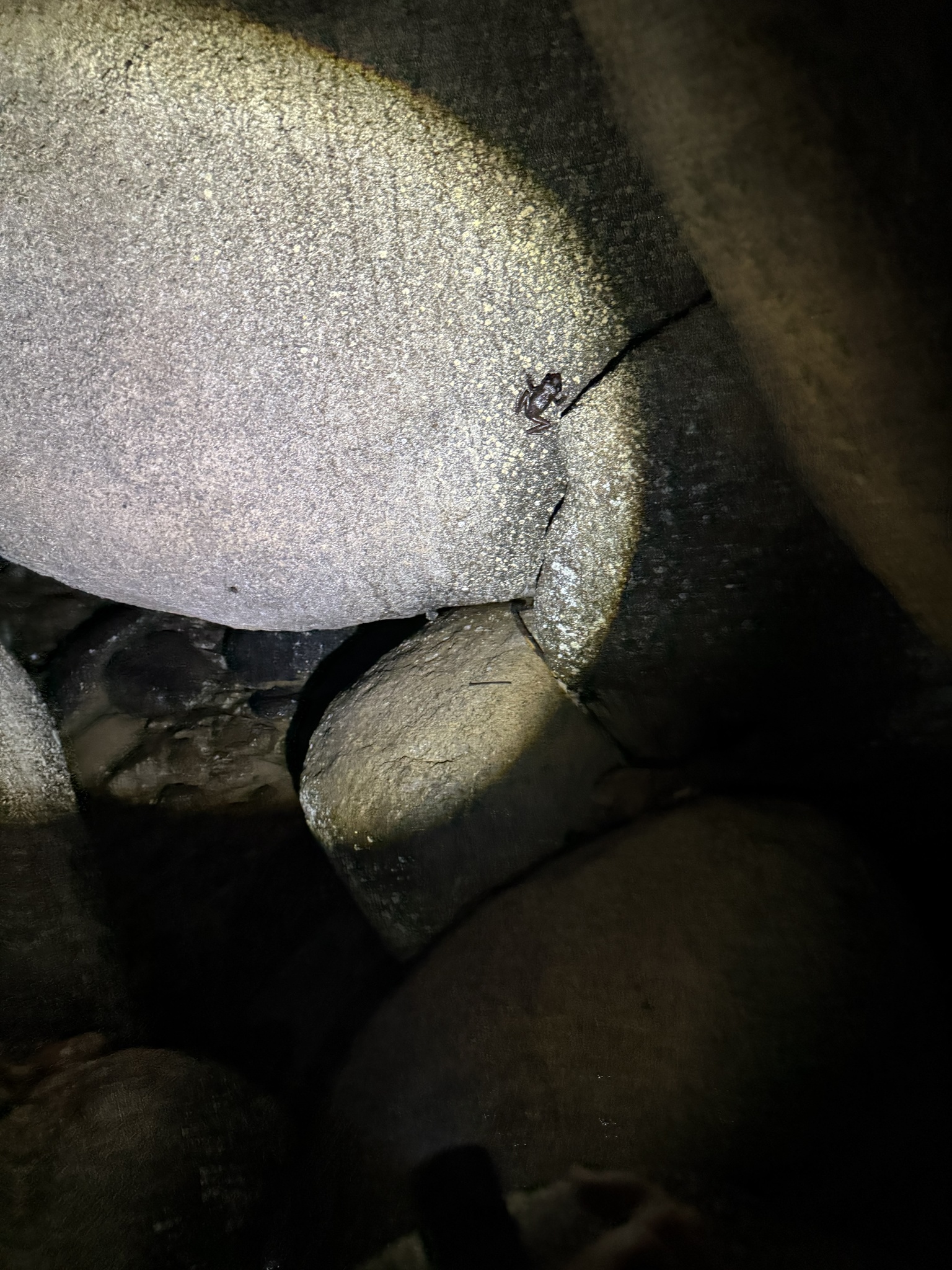
The Puerto Rican rock frog (Eleutherodactylus cooki), also known as the Puerto Rican cave-dwelling frog or rock coquí, and locally as coquí guajón, or guajón for brevity, is a threatened frog species from the coqui genus.
- Kingdom
- Animalia
- Phylum
- Chordata
- Class
- Amphibia
- Order
- Anura
- Family
- Eleutherodactylidae
- Genus
- Eleutherodactylus
- Species
- Eleutherodactylus cooki
Description
The Puerto Rican rock frog (Eleutherodactylus cooki), also known as the Puerto Rican cave-dwelling frog or rock coquí, and locally as coquí guajón, or guajón for brevity, is a threatened frog species from the coqui genus. This unique species of tropical frogs dwells primarily in crevices and grottos in the Cuchilla de Panduras mountain range in southeastern Puerto Rico. The native name guajón is derived from its habitat, guajonales, which are caves formed by rock formations between huge stones. Despite being the state animal and considered emblematic of the region, of the 17 species of coquí, three are believed to be extinct and the rest are rare and declining in numbers. The Puerto Rican rock frog is extremely restricted in geographical distribution. The frog is threatened due to deforestation, agricultural, rural, and industrial development, and the associated infrastructure. It is sometimes called the "demon of Puerto Rico" (demonio de Puerto Rico in Spanish) because of its eerie call and phantom-like appearance. The species was first described by American herpetologist, Chapman Grant in 1932.
Gallery
Ajouter des photos
Partagez vos photos de cette espèce (jusqu'à 20 à la fois) : elles sont vérifiées automatiquement, puis publiées.
Répartition
Occurrences observées (données GBIF). Les zones hors aire d'origine peuvent indiquer une présence introduite ou invasive.
Sources et crédits
Informations provenant de plusieurs sources vérifiées. Dernière mise à jour : .
Crédits photos (6)
- Photo : Finca Gaia · CC BY-NC 4.0 · via GBIF
- Photo : @gehz · CC BY-NC 4.0 · via iNaturalist
- Photo : Steve Maldonado Silvestrini (@stevemaldonadosilvestrini) · CC BY-NC 4.0 · via iNaturalist
- Photo : Wilfredo Falcon (@wfalconpr) · CC BY-NC 4.0 · via iNaturalist
- Photo : Omar Monzon Carmona (@omarmcarmona) · CC BY-NC 4.0 · via iNaturalist
- Photo : Yinan Li (@diomedea_exulans_li) · CC BY-NC 4.0 · via iNaturalist
Mentions de licence
Texte disponible sous licence CC BY-SA 4.0. Il adapte notamment Wikipedia (CC BY-SA) : Puerto Rican rock frog (Wikipédia, auteurs dans l’historique de l’article).
- Taxonomie : GBIF Backbone Taxonomy (CC BY 4.0)
- Carte : occurrences GBIF, fond © contributeurs OpenStreetMap (ODbL)
Détail : Sources et licences.
Discussion (0)
Aucun message pour l’instant. Lancez la discussion sur cette fiche (sources, précisions, débats éditoriaux).
Connectez-vous pour participer à la discussion.