
Hellbender
Cryptobranchus alleganiensis
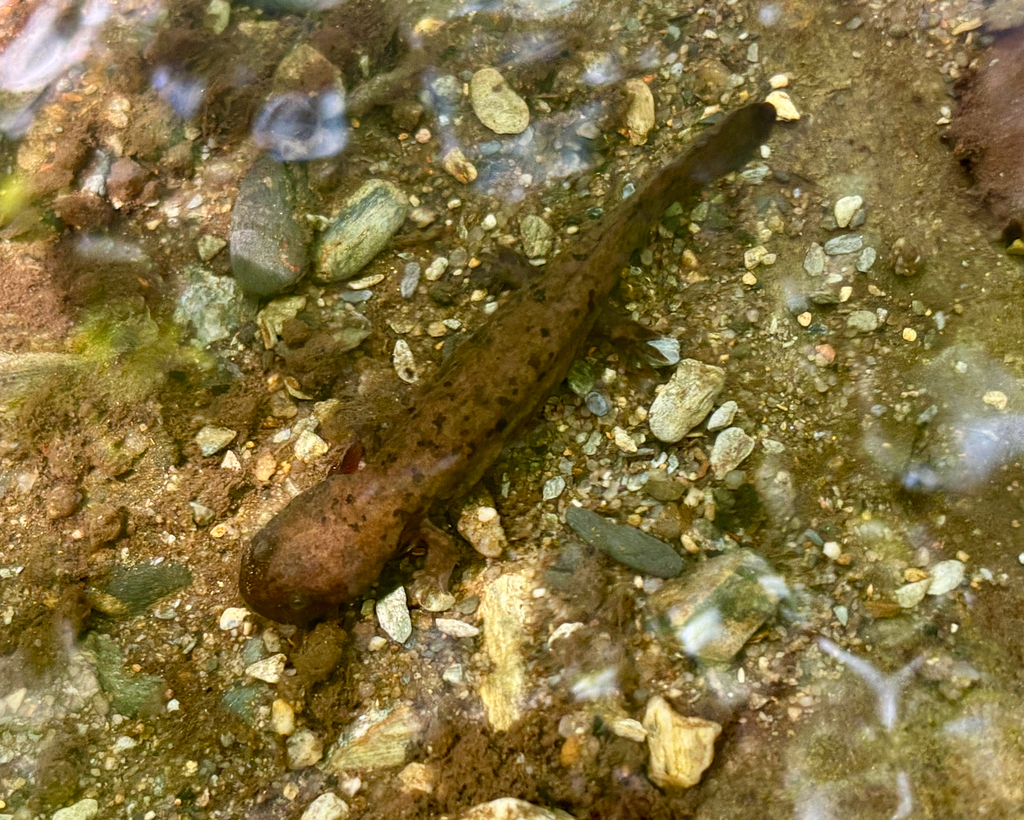
The hellbender (Cryptobranchus alleganiensis), also known as the hellbender salamander, is a species of aquatic giant salamander endemic to the eastern and central United States.
- Kingdom
- Animalia
- Phylum
- Chordata
- Class
- Amphibia
- Order
- Caudata
- Family
- Cryptobranchidae
- Genus
- Cryptobranchus
- Species
- Cryptobranchus alleganiensis
Description
The hellbender (Cryptobranchus alleganiensis), also known as the hellbender salamander, is a species of aquatic giant salamander endemic to the eastern and central United States. It is the largest salamander in North America. A member of the family Cryptobranchidae, the hellbender is the only extant member of the genus Cryptobranchus. Other closely related salamanders in the same family are in the genus Andrias, which contains the Japanese and Chinese giant salamanders. The hellbender is much larger than any other salamander in its geographic range, and employs an unusual adaption for respiration through cutaneous gas exchange via capillaries found in its lateral skin folds. It fills a particular niche-both as a predator and prey-in its ecosystem, which either it or its ancestors have occupied for around 65 million years. The species is listed as Vulnerable on the IUCN Red List of Threatened Species due to the impacts of disease and widespread habitat loss and degradation throughout much of its range. Eastern hellbender populations are dropping quickly across most of their range, nearly 80% are declining or disappearing altogether. A reason for this is the loss of forest along streams, which they rely on to keep their habitats stable and clean. In many places, the populations are mostly older individuals, with few young hellbenders showing up to replace them.
Gallery
Ajouter des photos
Partagez vos photos de cette espèce (jusqu'à 20 à la fois) : elles sont vérifiées automatiquement, puis publiées.
Répartition
Occurrences observées (données GBIF). Les zones hors aire d'origine peuvent indiquer une présence introduite ou invasive.
Sources et crédits
Informations provenant de plusieurs sources vérifiées. Dernière mise à jour : .
Crédits photos (8)
- Photo : Robby Deans (@hydaticus) · CC BY-NC 4.0 · via iNaturalist
- Photo : Matthew Inabinett (@matthewinabinett) · CC BY 4.0 · via iNaturalist
- Photo : @danielmhsu · CC BY-NC 4.0 · via iNaturalist
- Photo : @ethanroyal · CC BY-NC 4.0 · via iNaturalist
- Photo : @warmouthkee · CC BY-NC 4.0 · via iNaturalist
- Photo : Chloe (@corvuschloensis) · CC BY-NC 4.0 · via iNaturalist
- Photo : @jacksworldofwildlife · CC BY-NC 4.0 · via iNaturalist
- Photo : Kevin Metcalf (@kevinemetcalf) · CC BY-NC 4.0 · via iNaturalist
Mentions de licence
Texte disponible sous licence CC BY-SA 4.0. Il adapte notamment Wikipedia (CC BY-SA) : Hellbender (Wikipédia, auteurs dans l’historique de l’article).
- Taxonomie : GBIF Backbone Taxonomy (CC BY 4.0)
- Carte : occurrences GBIF, fond © contributeurs OpenStreetMap (ODbL)
- Statut de conservation : Liste rouge de l'UICN, via Wikidata (CC0)
Détail : Sources et licences.
Discussion (0)
Aucun message pour l’instant. Lancez la discussion sur cette fiche (sources, précisions, débats éditoriaux).
Connectez-vous pour participer à la discussion.