
Axolotl
Ambystoma mexicanum
The axolotl ( ; from Classical Nahuatl: āxōlōtl [aːˈʃoːloːtɬ] ; Ambystoma mexicanum) is a species of mole salamander.

- Kingdom
- Animalia
- Phylum
- Chordata
- Class
- Amphibia
- Order
- Caudata
- Family
- Ambystomatidae
- Genus
- Ambystoma
- Species
- Ambystoma mexicanum
Description
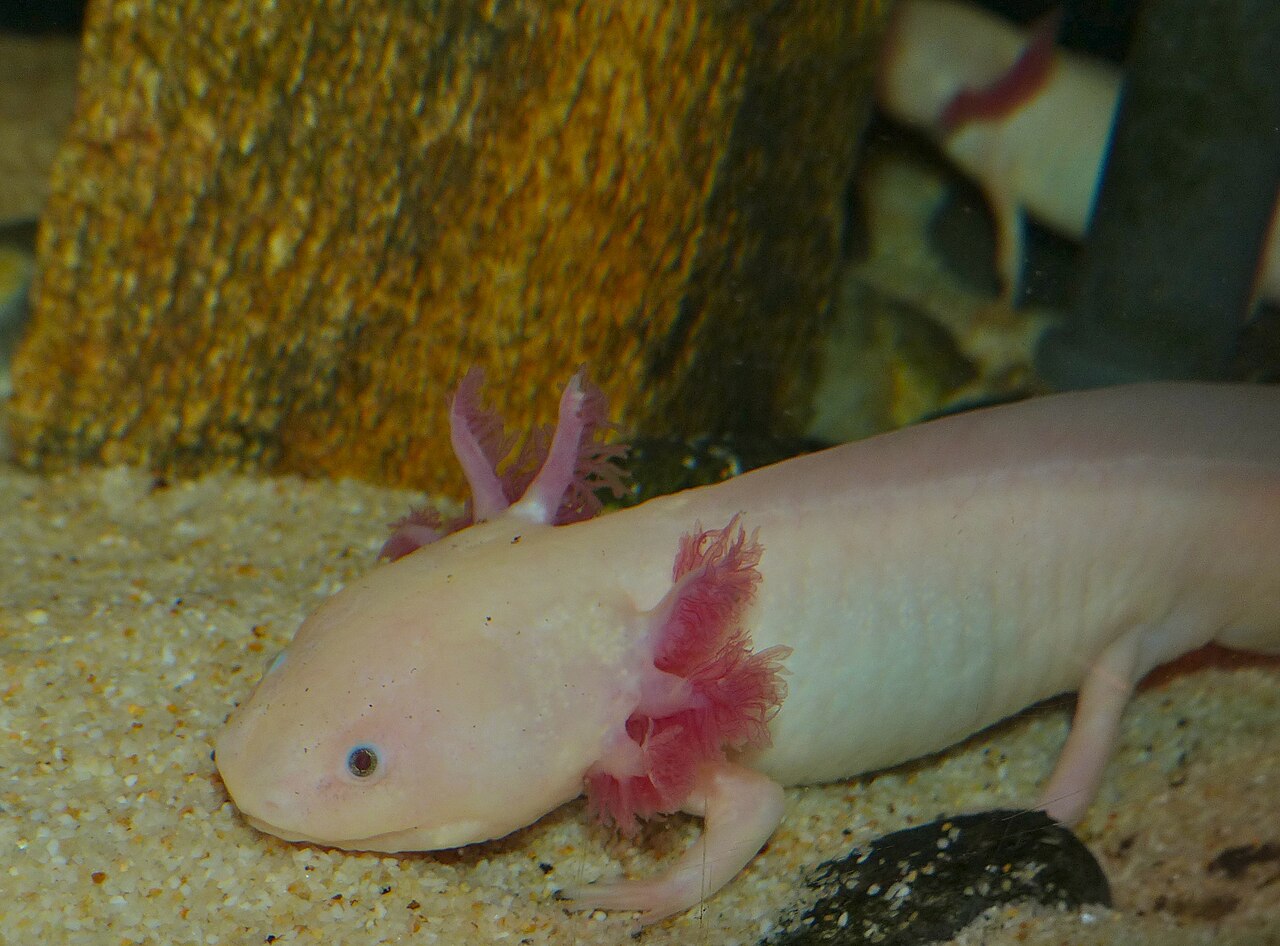
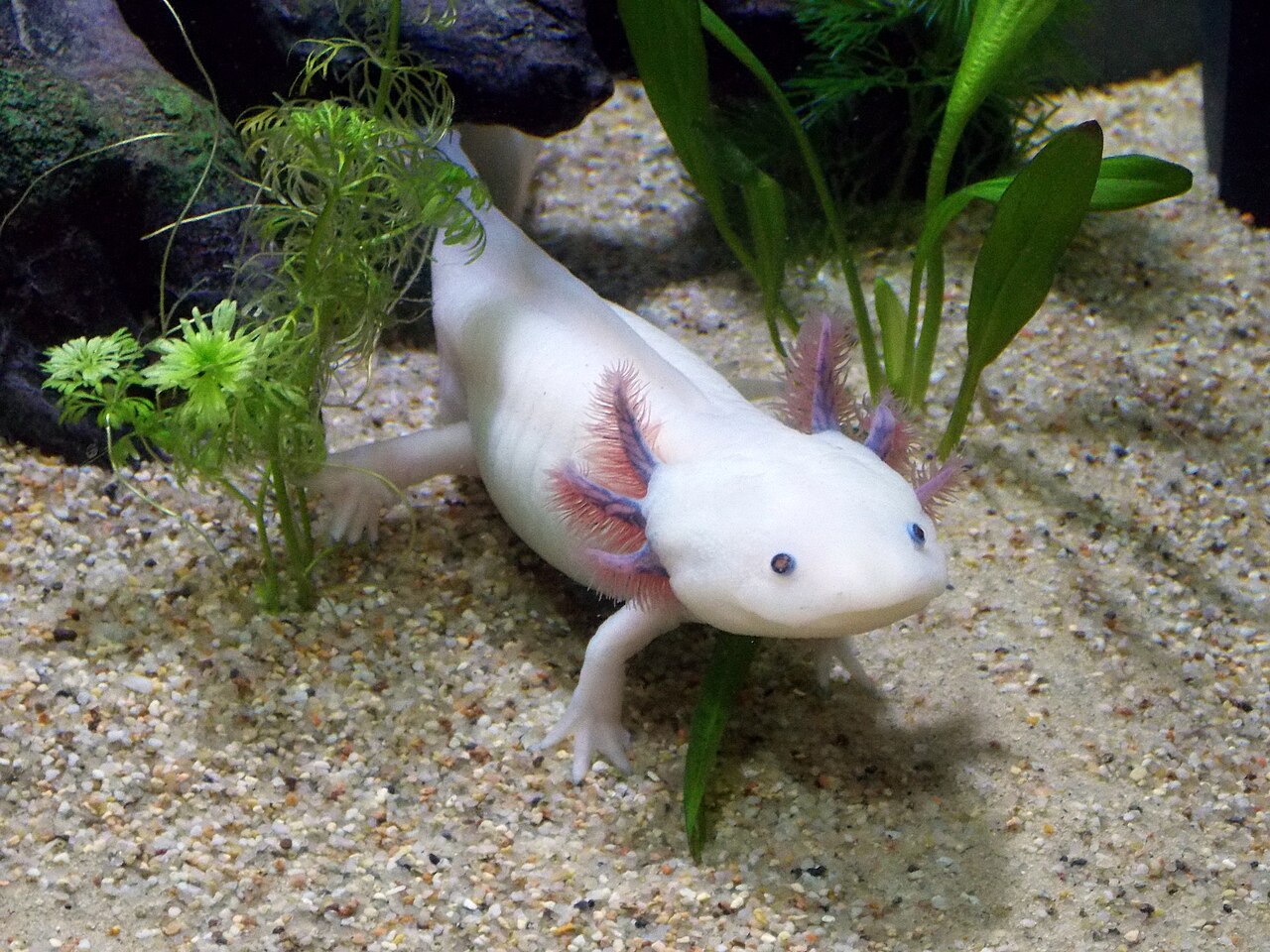
The axolotl ( ; from Classical Nahuatl: āxōlōtl [aːˈʃoːloːtɬ] ; Ambystoma mexicanum) is a species of mole salamander. It is neotenic, reaching sexual maturity without undergoing metamorphosis, and the adults remain fully aquatic with obvious external gills. Axolotls may be difficult to distinguish from the larval stage of other neotenic adult mole salamanders, in particular the tiger salamander, or other species such as mudpuppies. Axolotls originally inhabited a system of interconnected wetlands and lakes in the highlands of Mexico. They were known to inhabit the smaller lakes of Xochimilco and Chalco and are presumed to have inhabited the larger lakes of Texcoco and Zumpango. The desiccation of these lakes, initiated by the Aztecs and accelerated during the 20th century, has led to the destruction of much of the axolotl's natural habitat, an area now largely occupied by Mexico City. Wild axolotls have been driven to near extinction by the introduction of invasive species such as tilapia and carp; with a decreasing population of around 50 to 1,000 adult individuals, the species has been assessed as critically endangered by the International Union for Conservation of Nature (IUCN) and is listed under Appendix II of the Convention on International Trade in Endangered Species (CITES). There currently exists a large captive population of axolotls, with specimens used extensively in scientific research because of their unusual ability to regenerate body parts, including limbs, gills and parts of their eyes and brains. The species is also used as a model organism. As aquarium technology has developed, axolotls have become a common exhibit in zoos and public aquariums, as well as an occasional pet in home aquariums. The axolotl is a popular subject in contemporary culture, inspiring a number of works and characters in the media.
Gallery
Ajouter des photos
Partagez vos photos de cette espèce (jusqu'à 20 à la fois) : elles sont vérifiées automatiquement, puis publiées.
Répartition
Occurrences observées (données GBIF). Les zones hors aire d'origine peuvent indiquer une présence introduite ou invasive.
Les morphes de cette espèce (7)
Sources et crédits
Informations provenant de plusieurs sources vérifiées. Dernière mise à jour : .
Crédits photos (6)
- Photo : F. Gual-Suarez · CC BY-NC 4.0 · via GBIF
- Photo : Anneli Salo · CC BY-SA 3.0 · via Wikimedia Commons
- Photo : Fernando Losada Rodríguez · CC BY-SA 4.0 · via Wikimedia Commons
- Photo : Stan Shebs · CC BY-SA 3.0 · via Wikimedia Commons
- Photo : ZeWrestler · CC BY 3.0 · via Wikimedia Commons
- Photo : Faldrian · CC BY-SA 3.0 · via Wikimedia Commons
Mentions de licence
Texte disponible sous licence CC BY-SA 4.0. Il adapte notamment Wikipedia (CC BY-SA) : Axolotl (Wikipédia, auteurs dans l’historique de l’article).
- Taxonomie : GBIF Backbone Taxonomy (CC BY 4.0)
- Carte : occurrences GBIF, fond © contributeurs OpenStreetMap (ODbL)
- Statut de conservation : Liste rouge de l'UICN, via Wikidata (CC0)
Détail : Sources et licences.
Discussion (0)
Aucun message pour l’instant. Lancez la discussion sur cette fiche (sources, précisions, débats éditoriaux).
Connectez-vous pour participer à la discussion.