
Traquet afroalpin
Pinarochroa sordida
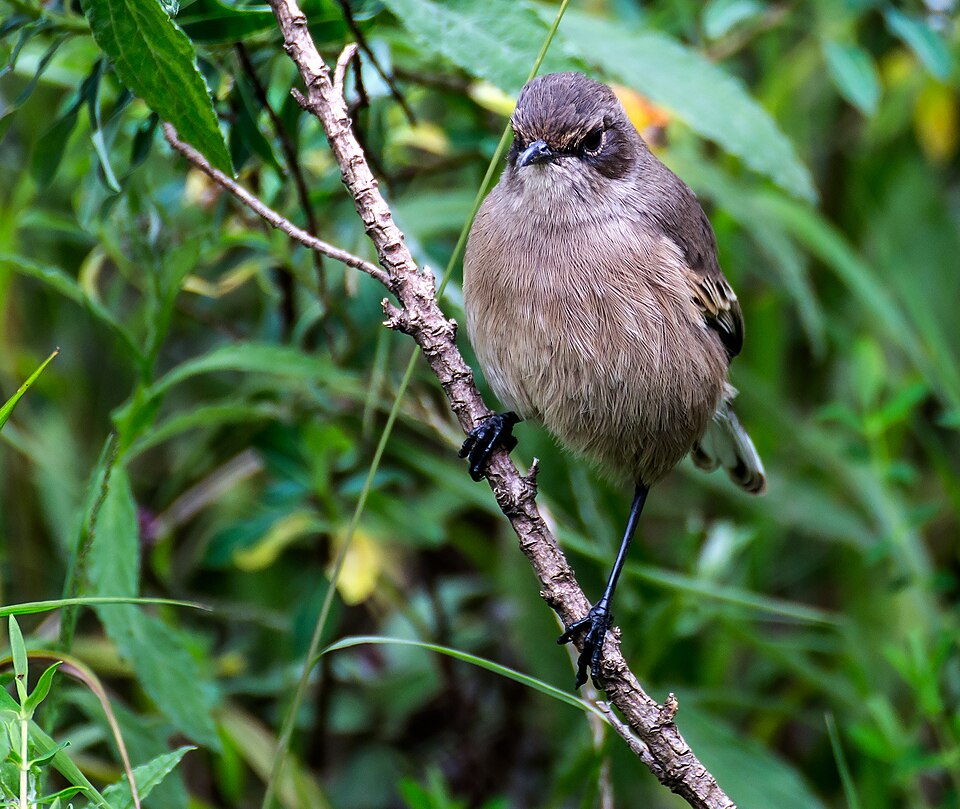
Le Traquet afroalpin (Pinarochroa sordida anciennement Cercomela sordida) est une espèce de passereau de la famille des Muscicapidae.
- Règne
- Animalia
- Embranchement
- Chordata
- Classe
- Aves
- Ordre
- Passeriformes
- Famille
- Muscicapidae
- Genre
- Pinarochroa
- Espèce
- Pinarochroa sordida
Portrait
Le Traquet afroalpin (Pinarochroa sordida anciennement Cercomela sordida) est une espèce de passereau de la famille des Muscicapidae.
Il est le principal pollinisateur du lobelia du Mont Kenya.
Répartition et sous-espèces
Selon la classification de référence du Congrès ornithologique international (14.2, 2024) il se répartit en quatre sous-espèces :
- Pinarochroa sordida sordida (Rüppell, 1837), hauts plateaux abyssins ;
- Pinarochroa sordida ernesti Sharpe, 1900, forêts d'altitude d'Afrique orientale ;
- Pinarochroa sordida olimotiensis H.F.I. Elliott, 1945, massif du Ngorongoro ;
- Pinarochroa sordida hypospodia Shelley, 1885, Kilimandjaro.
Description
Le Traquet afroalpin (Pinarochroa sordida anciennement Cercomela sordida) est une espèce de passereau de la famille des Muscicapidae, native de l'afromontane orientale. Il est le principal pollinisateur du lobelia du Mont Kenya.
Galerie
Ajouter des photos
Partagez vos photos de cette espèce (jusqu'à 20 à la fois) : elles sont vérifiées automatiquement, puis publiées.
Répartition
Occurrences observées (données GBIF). Les zones hors aire d'origine peuvent indiquer une présence introduite ou invasive.
Sources et crédits
Informations provenant de plusieurs sources vérifiées. Dernière mise à jour : .
Crédits photos (6)
- Photo : This image was produced by me, David Castor (user:dcastor). The pictures I submit to the Wikipedia Project are released to the public domain. This gives you the right to use them in any way you like, without any kind of notification. This said, I would still appreciate to be mentioned as the originator whenever you think it complies well with your use of the picture. A message to me about how it has been used would also be welcome. You are obviously not required to respond to these wishes of mine, just in a friendly manner encouraged to. (All my photos are placed in Category:Images by David Castor or a subcategory thereof.) · CC0 (domaine public) · via Wikimedia Commons
- Photo : Michael Bierbaumer (@michael_bierbaumer) · CC BY-NC 4.0 · via iNaturalist
- Photo : Graeme Baxter (@bonxie62) · CC BY-NC 4.0 · via iNaturalist
- Photo : @indi84 · CC BY-NC 4.0 · via iNaturalist
- Photo : Ruperl (@ruperl_h) · CC BY-NC 4.0 · via iNaturalist
- Photo : נדב גופר (@greenstep1) · CC BY-NC 4.0 · via iNaturalist
Mentions de licence
Texte disponible sous licence CC BY-SA 4.0. Il adapte notamment Wikipédia (EN) : Moorland chat, Traquet afroalpin (Wikipédia, auteurs dans l’historique de l’article).
- Taxonomie : GBIF Backbone Taxonomy (CC BY 4.0)
- Carte : occurrences GBIF, fond © contributeurs OpenStreetMap (ODbL)
- Statut de conservation : Liste rouge de l'UICN, via Wikidata (CC0)
Détail : Sources et licences.
Discussion (0)
Aucun message pour l’instant. Lancez la discussion sur cette fiche (sources, précisions, débats éditoriaux).
Connectez-vous pour participer à la discussion.